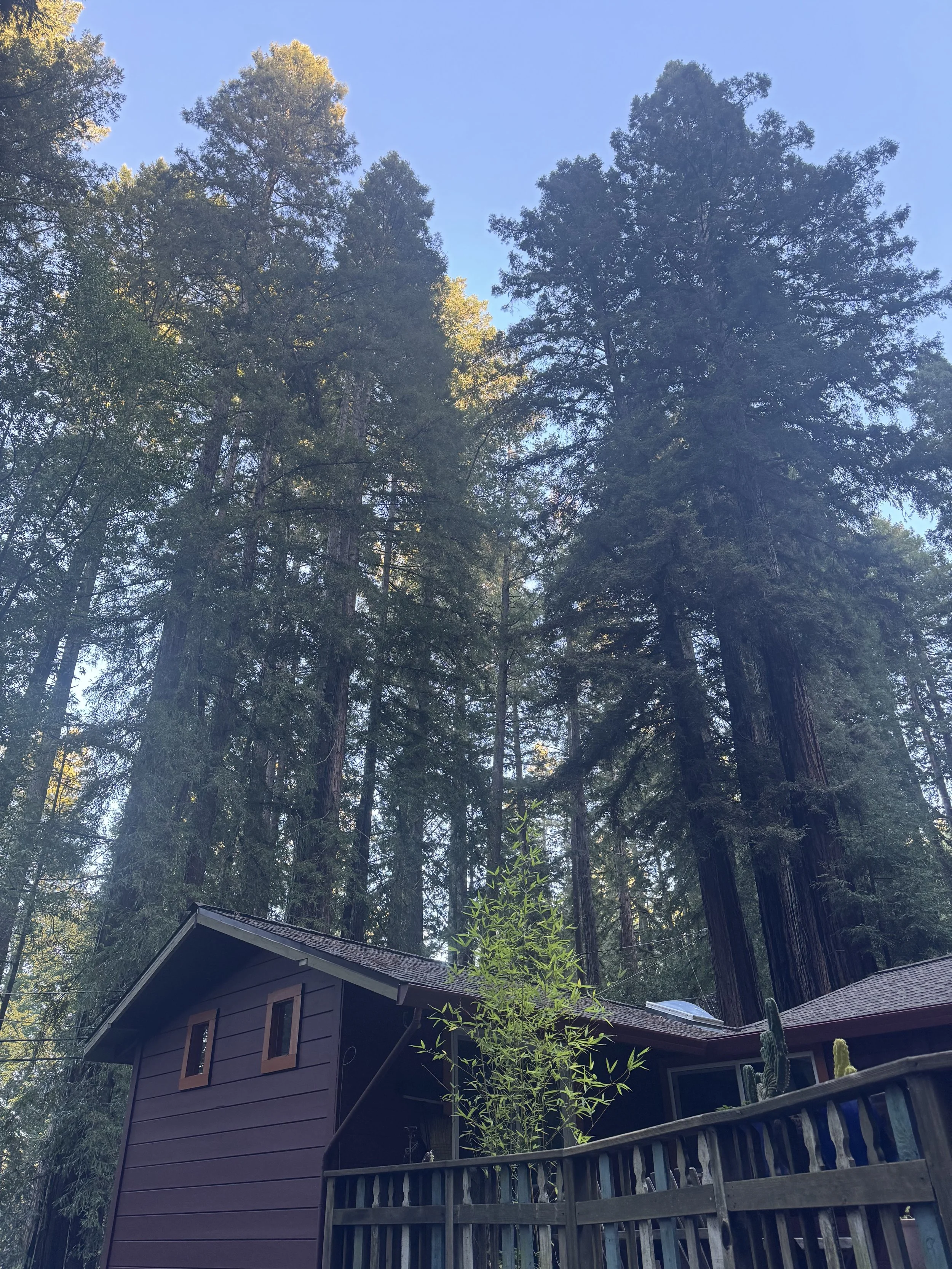
What the Redwoods Teach Us About Wellness
Living among the redwoods has a way of recalibrating your sense of time.
After recently watching a PBS special on these ancient trees, I was struck by how little has changed about them, and how much that contrasts with the modern wellness world. Redwoods don’t chase trends. They don’t force outcomes. And yet, they thrive for thousands of years.
In many ways, they are quiet teachers.
Lesson One: Growth Happens When Conditions Are Right
Redwoods are often associated with slow time and ancient wisdom, but what’s fascinating is that they actually grow quite quickly, especially in their younger years. When conditions are right; moist air, rich soil, steady fog-they can shoot upward with remarkable speed.
The lesson isn’t that growth should be slow. It’s that growth should be supported.
In wellness, we often try to force change through restriction or intensity. Redwoods show us another way. They grow rapidly because their environment nourishes them. Their growth is a response to support, not stress.
Holistic wellness works in much the same way. When the body is properly nourished and gently supported, positive changes can happen faster than we expect. The goal isn’t to rush the process—it’s to create the right conditions and let the body do what it naturally knows how to do.
Lesson Two: Deep Roots Create Resilience
Despite their towering height, redwoods have surprisingly shallow roots. What makes them resilient is not depth alone, but interconnection. Their roots intertwine underground, forming living networks that stabilize not only the entire forest, but the redwoods’ own family rings which are circles of trees growing together from a shared root system.
Our bodies mirror this wisdom. Nervous system health, digestion, immunity, and emotional wellbeing are deeply interconnected. When one system is supported, others benefit. This is why holistic wellness focuses on the whole person rather than isolated symptoms.
Lesson Three: Longevity Comes From Balance, Not Stress
Redwoods have survived fires, floods, droughts, and centuries of change. They do this not by resisting their environment, but by adapting to it-holding moisture in their bark, regenerating after damage, and coexisting with natural cycles.
In wellness culture, we often push our bodies harder in the name of health. The redwoods remind us that longevity comes from balance, recovery, and working with the body’s natural rhythms instead of against them.
Lesson Four: Stillness Is Not Inactivity
Standing in a redwood forest feels like entering a cathedral of quiet. Yet beneath that stillness is constant activity-nutrients moving, roots communicating, ecosystems thriving.
Rest, reflection, and calm are not signs of stagnation. They are essential states where healing happens. Herbs and nutrition that calm and nourish, rather than stimulate and override, honor this same principle.
Listening to the Ancient Teachers
Living among these trees has shifted how I think about wellness. It feels less like a checklist and more like a relationship, one that unfolds over time with patience and respect.
The redwoods don’t ask us to do more. They invite us to slow down, connect deeply, and trust the long game.
And perhaps that is their greatest lesson of all.