Cortisol: Friend, Foe, or Just Misunderstood?
If you've spent any time on social media lately, you've probably heard that cortisol is bad. It's blamed for everything from weight gain and poor sleep to blood sugar problems and feeling stressed. And with all the talk about “lowering your cortisol,” it's easy to come away thinking that cortisol is a hormone we should try to get rid of.
But here's the thing:
Your body needs cortisol.
In fact, cortisol plays an important role in helping you respond to stress, maintain energy availability, regulate inflammation, and keep your body functioning normally. So perhaps cortisol isn't the enemy after all. Maybe it's just misunderstood.
What Exactly Is Cortisol?
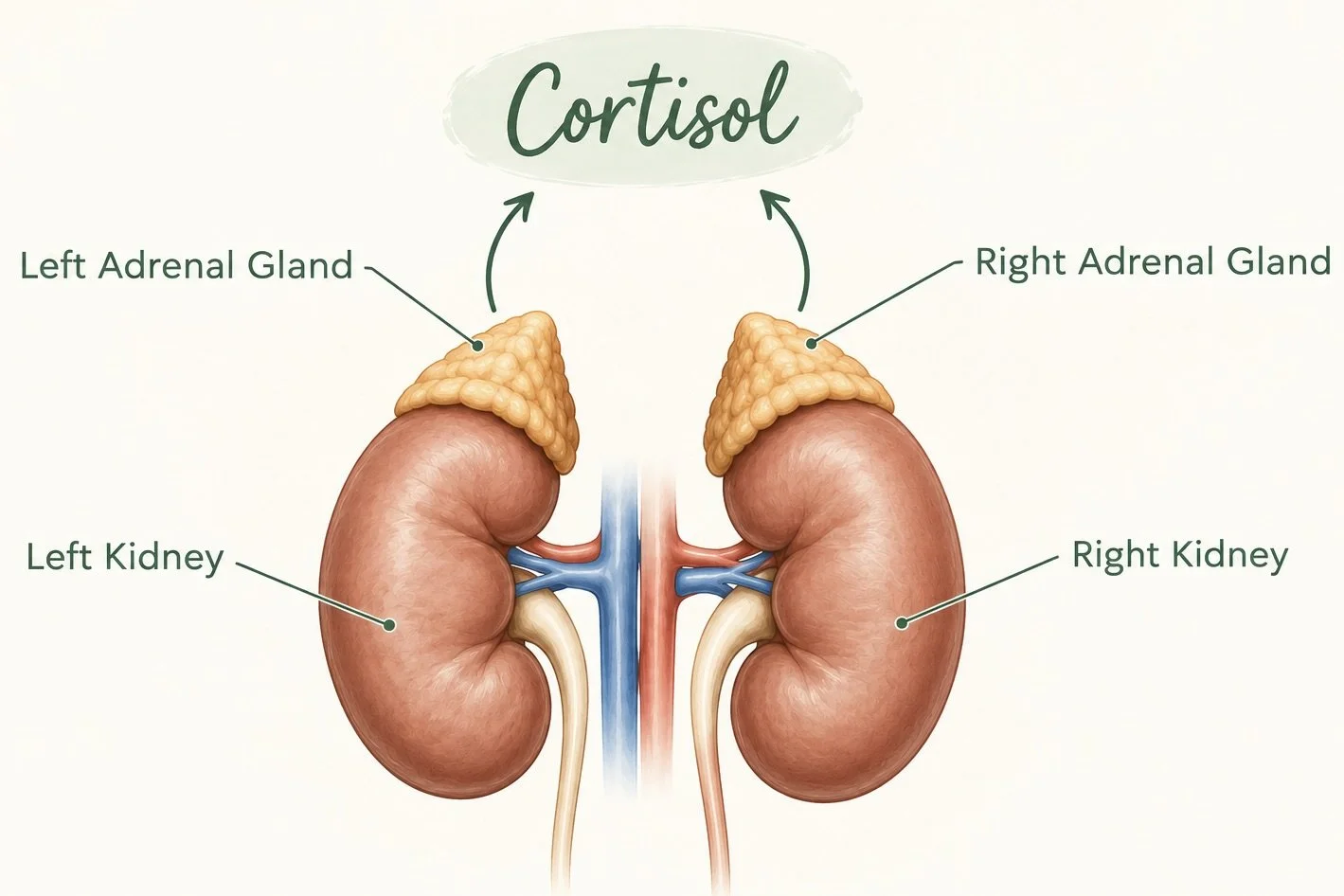
Cortisol is one of the primary hormones produced by your adrenal glands. As we talked about in my previous article, What Your Adrenal Glands Actually Do (And Why They Matter More Than You Think), your adrenal glands are small but incredibly busy organs that help your body respond to the demands placed on it.
Cortisol is one of the ways they do that.
When your brain perceives a threat or stressor, it activates what's known as the HPA axis, the hypothalamic-pituitary-adrenal axis. Think of it as a communication system between your brain and adrenal glands. The hypothalamus sends a signal to the pituitary gland. The pituitary then sends a signal to the adrenal glands, telling them to release cortisol. Cortisol helps prepare your body to respond by making more energy available and helping you stay alert and ready to deal with whatever is happening. Once the stressor has passed, cortisol levels normally begin to decrease. This feedback system helps bring the body back toward homeostasis - or balance.
And that's an important part of the story.
Cortisol isn't designed to be “high” or “low” all the time. It's designed to respond to what your body needs.
Cortisol Isn't the “Bad Guy”
Here's where things can get confusing. We often hear that high cortisol is bad and chronically elevated cortisol can certainly have negative effects on the body. But cortisol itself isn't the problem. The stress response is an incredibly useful survival mechanism.
Imagine you're walking across a street and suddenly a car comes around the corner. Your body doesn't stop to calmly consider the situation. Your brain recognizes a potential threat and immediately shifts your physiology into action. Your heart rate increases. Your muscles become ready to move. Energy is more readily available. That's your stress-response system doing exactly what it's designed to do. The problem comes when the body is repeatedly receiving signals that it needs to be prepared for danger and doesn't get enough opportunity to recover. And those signals don't necessarily have to come from an actual physical threat.
Your Brain Doesn't Always Know the Difference
One of the fascinating things about the stress response is that your brain responds to perceived threats much the same way it responds to real physical danger.
Whether you're slamming on the brakes to avoid a car accident or lying awake replaying tomorrow's presentation in your mind, your body activates many of the same physiological pathways. To your brain, both situations signal that it's time to prepare for survival. And modern life gives us plenty of opportunities to send those signals.
Work demands. Family responsibilities. Financial concerns. Relationship difficulties. Health challenges. Unexpected changes. Even our own thoughts can keep the stress response activated.
Stress Isn't Just What's Happening in Your Head
And this is where I think the cortisol conversation gets particularly interesting. Stress isn't limited to psychological or emotional stress. Remember the HPA axis? Other stressors that affect this system include glycemic dysregulation, circadian disruption, and inflammatory signals.
For example, cortisol helps make glucose available for energy during a stress response. But blood sugar regulation and the stress response are closely connected. Your body's systems don't operate independently of one another.
The same is true of your sleep-wake cycle. Your circadian rhythm helps regulate the production and release of hormones such as cortisol and melatonin, while also influencing energy, hunger, blood sugar regulation, inflammation, sleep, and even digestion.
Your body is interconnected.
That's why simply asking, “How do I lower my cortisol?” may be missing the bigger question: What is my body responding to?
But What About Low Cortisol?
We hear a lot about cortisol being too high, but your body needs cortisol and too little cortisol can also be a problem.
Cortisol plays an important role in maintaining blood pressure, blood sugar, energy availability, and your body's response to physical stress. When the body isn't producing enough cortisol, this can be a sign of adrenal insufficiency, a condition that can have several causes. Addison's disease, for example, is a form of adrenal insufficiency in which the adrenal glands are damaged and don't produce enough cortisol.
It's important to remember, though, that symptoms such as fatigue, weakness, sleep changes, or difficulty managing stress can have many different causes. Feeling tired doesn't automatically mean your cortisol is too high or too low. That's one reason it's important to look at the bigger picture rather than assuming that one hormone explains everything.
The goal isn't to push cortisol as low as possible. More isn't always better, and less isn't always better either. What matters is whether your body can produce the right amount at the right time and appropriately respond to the demands being placed on it.
Your Body Is Always Trying to Adapt
This brings us back to something I said in my first adrenal article:
Your body isn't working against you. It's responding for you.
The stress response exists for a reason. Cortisol exists for a reason. Your body is constantly taking in information from your environment and adjusting accordingly. Sometimes that means increasing cortisol because you need to respond to a challenge. Sometimes it means bringing cortisol back down because the challenge has passed. And sometimes, when stressors continue without adequate recovery, those systems can become disrupted.
Instead of thinking about cortisol as something to fear or something we need to eliminate, we can start asking better questions:
What is my body responding to?
Am I giving it enough opportunities to recover?
How are my sleep, nutrition, blood sugar, daily rhythms, and stress levels influencing the bigger picture?
Those questions can lead us somewhere much more useful than simply trying to “lower cortisol.”
The Takeaway
Cortisol isn't your enemy. It's an essential hormone that helps your body respond to life's challenges and maintain balance. The goal isn't zero stress or zero cortisol. That's neither realistic nor desirable.
The goal is to support your body's ability to respond when it needs to and recover when it doesn't.
And sometimes, understanding what your body is communicating is the first step.
If you're noticing changes in your energy, sleep, blood sugar, stress response, or hormones, you don't necessarily need another list of things to eliminate or another supplement to take. This is an opportunity to step back and look at the bigger picture. Remember that you don't have to figure it all out on your own. Every person's health story is unique, and sometimes it helps to have someone connect the dots. If you're looking for personalized guidance, I'd love to help you understand what your body may be trying to tell you.
Your body has an incredible capacity to heal. When we learn to listen to our bodies instead of fighting against them, that is where healing begins.